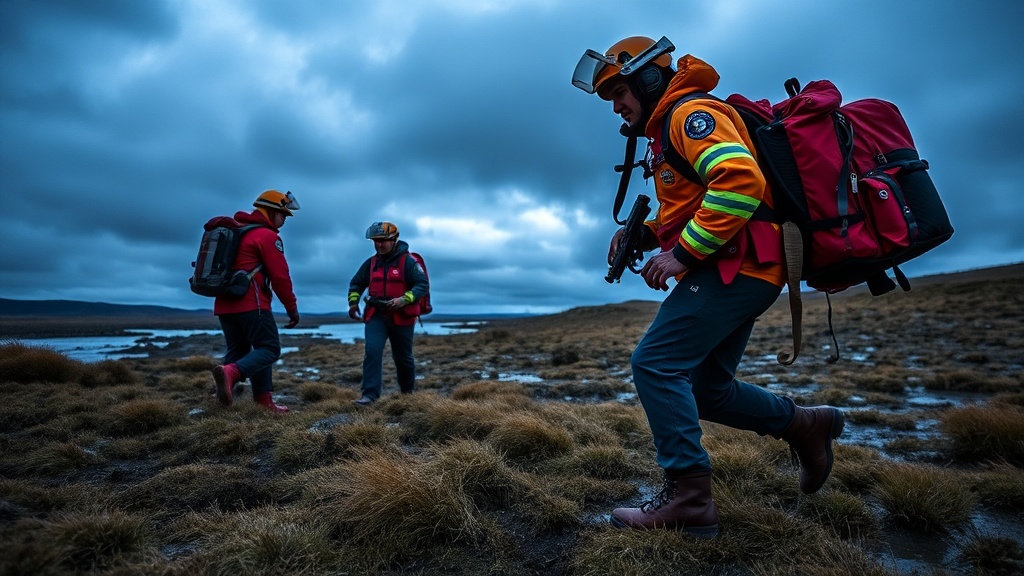
Joining Ground Search and Rescue Teams in Nova Scotia

Have you ever wondered who steps up when a hiker goes missing in the dense woods of the Annapolis Valley or along the foggy shores of the South Shore?
Living here means understanding that our backyard is beautiful but occasionally dangerous. Whether it is the thick brush of the Wentworth Valley or the unpredictable tides near Hall’s Harbour, people get lost. When they do, the call goes out to local volunteers. This guide covers the process of joining Ground Search and Rescue (GSAR) teams in Nova Scotia and why these volunteer organizations are the backbone of our rural safety net. It matters because our province relies almost entirely on dedicated locals to handle these high-stakes situations—often in the middle of a nor'easter. We are not just talking about hobbyists; we are talking about a professional-grade volunteer force that keeps our community safe when minutes count.
What does it take to join a search team in Nova Scotia?
You don’t need to be a former commando to help, but you do need a massive amount of dedication to our community. Most teams in Nova Scotia require a basic level of fitness—you should be able to walk several kilometres over uneven ground while carrying a pack—and a clean criminal record check. Since we handle vulnerable people, including lost children and seniors with dementia, the background screening is a big deal. You also need to be at least 18 years old. Most teams look for people who are level-headed and able to follow orders in stressful environments. If you are the type of person who stays calm when the weather turns sour on the Cabot Trail, you might be a great fit.
Training is where the real work begins. New recruits start as 'probationary' members. You will spend months learning the basics of tracking, map and compass work, and first aid. In Nova Scotia, this training is standardized through the Nova Scotia Ground Search and Rescue Association (NSGSARA). They ensure that a volunteer in Yarmouth has the same fundamental skills as someone in Sydney. This consistency is vital because when a large-scale search happens, teams from across the province often travel to help each other out. You might find yourself searching the woods near Shubenacadie one weekend and assisting a team in Pictou County the next.
Where can you find your nearest search and rescue headquarters?
Nova Scotia is divided into several zones, each with its own local team. These aren't government offices; they are community-run charities. For example, Halifax Regional Search and Rescue operates out of a base in Lake Echo, while Valley Search and Rescue covers the Annapolis Valley. Each team has its own application cycle. Some only take new members once a year in the autumn, while others might have a rolling intake. You should check the NSGSARA website or the Nova Scotia Emergency Management Office (EMO) for a full directory of local units. It is best to join the team closest to where you live, as quick response times are often the difference between a successful rescue and a tragedy.
| Team Name | Primary Region | Terrain Type |
|---|---|---|
| Halifax Regional Search and Rescue | Halifax Regional Municipality | Urban, Coastal, & Dense Forest |
| Valley Search and Rescue | Kings County / Annapolis Valley | Mountainous & River Valley |
| Cape Breton Search and Rescue | Cape Breton Island | Highlands & Rugged Cliffs |
| North Shore Search and Rescue | Colchester & Pictou Counties | Agricultural & Deep Woods |
Once you find your local team, you will likely attend an information session. This is where the old-timers—the ones who have been out on hundreds of searches—will give you the straight talk about what the life is like. They will tell you about the 3:00 AM phone calls, the soaked boots, and the long hours spent standing in a swamp. But they will also tell you about the feeling of finding a missing person and bringing them back to their family. That connection to our community is why most of us do it. We don't do it for the glory; we do it because it is what neighbours in Nova Scotia do for one another.
How much time do volunteers actually spend on the trail?
The time commitment is probably the biggest hurdle for most people. It isn't just the searches; it is the training. Most teams meet once a week or every two weeks for practice. We practice in the dark, in the rain, and in the snow because that is when people usually go missing. You can expect to spend about 10 to 20 hours a month on regular training and meetings. Then there are the actual calls. A search can last for six hours or six days. While nobody is forced to attend every call—we all have jobs and families—the expectation is that you will show up whenever you are available. Employers in Nova Scotia are often very supportive of GSAR volunteers, but it is always a good idea to chat with your boss before you sign up.
The 24-Hour Pack Requirement
Every volunteer is required to maintain a '24-hour pack.' This is a backpack filled with everything you need to survive and function in the Nova Scotia woods for a full day and night without outside help. We are talking about extra layers of wool (never cotton!), waterproof gear, high-calorie food, water filtration, and basic shelter. Building this pack is a rite of passage. It shows you are ready to take care of yourself so that you can focus on taking care of the lost person. Most teams provide some specialized gear like radios and GPS units, but you will need to invest in your own sturdy boots and outdoor clothing. It can be a bit pricey at first, but having the right gear is a top priority for safety.
Specialized Units and Skills
As you gain experience, you can branch out into specialized areas. Some members join the K9 unit, working with highly trained search dogs. Others focus on Project Lifesaver, which uses radio frequency technology to find people with cognitive conditions who might wander. There are also remote rescue teams that use ATVs or snowmobiles to find their way through the more isolated parts of our province. If you have a background in communications or logistics, you might even end up working in the command bus, managing the complex map data that drives every search. There is a role for almost everyone, provided you have the heart for it.
We have seen a major shift in how searches are handled over the last decade. Technology has improved our ability to track where searchers have been, ensuring that no stone is left unturned. Even with fancy satellites and drones, the most effective tool we have in Nova Scotia is still a line of volunteers walking three metres apart through the brush. It is slow, hard, and tiring work, but it is the only way to be certain. When you are out there in the middle of the night in a place like the Musquodoboit Valley, you realize how much we rely on each other. Joining a team isn't just about learning skills; it is about becoming part of a tight-knit group that has each other's backs no matter what the Atlantic weather throws at us.
If you are ready to commit, start by reaching out to the team in your area. They are always looking for people who care about Nova Scotia and are willing to put in the work. You don't need to be an expert today; you just need to be willing to learn. Our community is safer because of people who decide that 'someone should do something' and then realize that they are that someone. Whether you end up as a team leader or a back-line searcher, your contribution keeps the fabric of our province strong. Grab your boots and see what you can do to help.