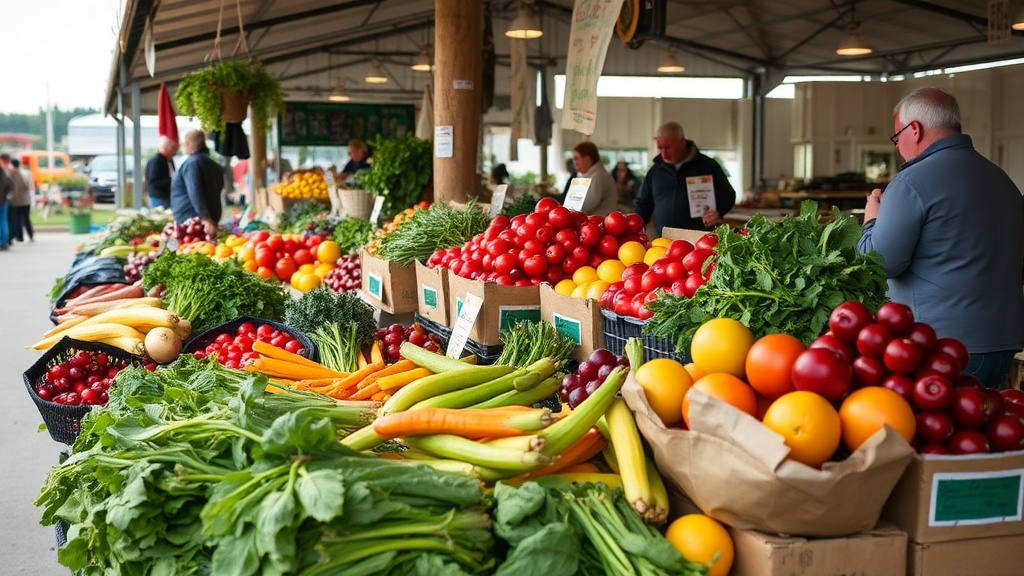
Nova Scotia Community Farmers Markets: Where Locals Find Fresh Atlantic Produce Year-Round

What You'll Find at Nova Scotia Community Farmers Markets
This guide covers the best community farmers markets across Nova Scotia — from seasonal rural stands to year-round indoor markets in Halifax and beyond. You'll learn which vendors sell Atlantic-caught seafood, where to find fresh Annapolis Valley produce in winter, and how our local markets support Nova Scotia farmers and fishers directly. Whether you're shopping for weekly groceries or searching for handmade goods from local artisans, Nova Scotia's farmers markets offer what chain stores simply can't.
Which Farmers Markets in Nova Scotia Stay Open Through Winter?
Seven markets across Nova Scotia operate year-round, giving locals access to fresh Atlantic produce even during our harshest months. The Halifax Seaport Farmers' Market leads the pack — housed in a converted warehouse on Marginal Road, it's open every Saturday from 8am to 2pm regardless of weather. Over 250 vendors pack the two-level space, offering everything from Digby scallops to Lunenburg County root vegetables.
The Wolfville Farmers' Market runs Saturday mornings year-round inside the Wolfville Legion Hall on Main Street. It's smaller — roughly 40 vendors — but the quality rivals anything in Halifax. You'll find Annapolis Valley apples well into March, storage onions and garlic from Berwick growers, and frozen wild blueberries from South Mountain farms.
In Cape Breton, the Sydney Farmers' Market keeps its Charlotte Street location heated through winter. It's a lifeline for locals who'd otherwise face a two-hour drive to find fresh greens in January. The market emphasizes preserved goods during colder months — think pickled beets, fermented sauerkraut, and jars of blueberry jam from Inverness County.
Here's the thing about winter markets in Nova Scotia: they're not just about produce. Vendors adapt. You'll see hydroponic lettuce from Amherst greenhouses, mushrooms grown in Truro basements, and greenhouse tomatoes from the Valley that taste better than anything shipped from Mexico. The catch? Selection narrows significantly after January. Smart shoppers stock up on storage crops in October and November.
Worth noting: several summer-only markets offer winter ordering programs. The Truro Farmers' Market — typically a May-to-October operation — runs a monthly pickup system where you preorder meat, preserves, and root cellared vegetables. Check their website for current availability.
Where Do Nova Scotia Farmers Markets Source Their Seafood?
Directly from wharves across the province — that's the honest answer. Nova Scotia's coastal location means most market vendors selling seafood either caught it themselves or bought it dockside that morning. The Halifax Seaport Market sits adjacent to the working waterfront, and you'll often see fishermen unloading while shoppers browse stalls upstairs.
At the Lunenburg Farmers' Market — held Saturdays at the Lunenburg Arena on Green Street — seafood dominates. Bluefin tuna from the LaHave River, lobster from the South Shore (in season), and fresh haddock fillets appear regularly. Vendors like Ocean Breeze Fisheries (based in Blue Rocks) sell whole fish you can have cleaned on-site. Bring a cooler. Seriously — you'll want one.
The Digby Farmers' Market operates differently. It's tiny — maybe 15 vendors — but the scallops are legendary. Digby scallops, harvested from the Bay of Fundy, fetch premium prices at Toronto restaurants. Here, you buy them from the families who dredged them. Prices run 30-40% below retail seafood counters, and the quality? There's no comparison.
That said, seafood availability at Nova Scotia farmers markets follows strict seasonal patterns. Lobster appears May through July (and briefly in December for Christmas markets). Snow crab hits stalls in April. Mackerel and herring — undervalued by most shoppers — offer incredible value in late summer when vendors practically give them away.
The Nova Scotia Fisheries Association maintains a directory of seafood vendors who sell direct to consumers. Many operate informal stands outside official market hours — worth asking about if you're building relationships with regular sellers.
| Market | Location | Seafood Specialties | Best Season |
|---|---|---|---|
| Halifax Seaport | Marginal Road, Halifax | Variety — all Atlantic species | Year-round |
| Lunenburg | Lunenburg Arena | Tuna, haddock, lobster | May-October |
| Digby | Digby Waterfront | Scallops, haddock | Year-round (reduced winter) |
| Yarmouth | Mariners Centre | Sea urchin, mackerel, halibut | June-October |
| Shelburne | Shelburne Community Centre | Swordfish, fresh cod | July-September |
How Do Nova Scotia Markets Compare to Grocery Store Prices?
It depends entirely on what you're buying — and when. Seasonal produce from Nova Scotia growers typically undercuts supermarket prices by 20-30% during peak harvest. Out-of-season tomatoes or peppers? You'll pay more at the market. The value proposition shifts based on your shopping strategy.
Here's what consistent data shows: Nova Scotia farmers market meat and poultry runs 15-25% above grocery store baseline. But the comparison isn't apples-to-apples. Market vendors sell pasture-raised pork from Pictou County farms, grass-fed beef from the Cobequid Hills, and free-range chickens that actually taste like chicken. You're paying for production methods, not just protein.
Seafood offers the clearest savings. Fresh haddock at Halifax markets averages $12-14 per pound during peak season. Compare that to $18-22 at Sobeys or Atlantic Superstore for fish that's already three days older. The gap widens for premium items like Digby scallops — $28/lb direct from fishers versus $45+ at retail.
Worth noting: many Nova Scotia markets now accept nutrition coupons through the FoodShare Nova Scotia program. Eligible households receive vouchers worth $15-20 weekly that double in value at participating markets. Ask at the information booth — most markets have one near the entrance.
The real savings? Relationships. Regular shoppers at the Alderney Landing Market in Dartmouth report vendors slipping extra produce into bags, offering "second" items (cosmetically flawed but perfectly edible) at deep discounts, and reserving sought-after cuts before they hit display tables. You won't get that treatment at Walmart.
What Local Products Should Nova Scotia Shoppers Prioritize?
Wild blueberries top the list — but not the cultivated highbush varieties sold in supermarkets. Nova Scotia's lowbush wild blueberries, harvested from Cumberland County barrens, contain significantly higher antioxidant levels. You'll find them fresh in August, frozen year-round, and dried at specialty vendors. The frozen wild blueberries from Berwick's Van Meekeren Farms beat anything in the freezer aisle for both price and flavor intensity.
Maple syrup from Nova Scotia producers represents another clear win. While Quebec dominates commercial production, our province's smaller operations — particularly in Colchester County and parts of Cape Breton — produce exceptional syrup with distinct mineral notes. Look for vendors carrying the Maple Producers Association of Nova Scotia certification. Prices run comparable to grocery store Quebec syrup, but you're supporting operations within 100 kilometers of your kitchen.
Honey from Nova Scotia apiaries offers genuine terroir differences. Wildflower honey from the Annapolis Valley tastes nothing like the buckwheat honey produced in Guysborough County. Some vendors sell varietal honeys — blueberry blossom, clover, goldenrod — that showcase specific nectar sources. The Honey Bee Farm in Wilmot (sold at multiple markets) offers tasting flights so you can identify your preference.
Here's the thing about cheese: Nova Scotia's dairy regulations once made small-scale cheese production nearly impossible. That's changed. Now you'll find award-winning options like that from Martock Glen Farm in Windsor — their aged cheddar rivals anything from Ontario or Vermont. The Dragon's Breath blue cheese from That Dutchman's Cheese Farm in Economy (sold at Halifax and Truro markets) has developed cult status among local food enthusiasts.
When and Where Are the Best Nova Scotia Summer Markets?
Saturday mornings between 8am and noon offer peak selection across Nova Scotia's seasonal markets. Arrive early for limited items — pastured eggs sell out fast, as do popular baked goods. The final hour often brings discounts as vendors reduce inventory, though choice narrows considerably.
The Halifax Brewery Market — held Sundays at the Halifax Brewery on Lower Water Street — deserves special mention. It's smaller than the Seaport Market, more neighborhood-focused, and vendors skew younger and more experimental. You'll find kombucha brewed in Dartmouth, sourdough from former restaurant bakers who went independent, and foraged mushrooms from guys who won't reveal their secret spots (fair enough).
Wolfville's Saturday market transforms the Legion parking lot into something approaching a community festival. Live music starts at 9am. Kids run between stalls while parents chat with farmers they've bought from for years. The Valley's agricultural roots show clearly here — you'll see generations of farming families represented, from teenagers selling their first cash crops to octogenarians who remember when this was all apple orchards.
In Cape Breton, the Mabou Farmers' Market (Sundays, Rankin School of the Narrows) punches above its weight. It's tiny — maybe two dozen vendors — but the community cohesion is unmatched. Gaelic speakers conduct transactions in their ancestral language. Scottish fiddlers provide soundtrack. The produce reflects Cape Breton's shorter growing season but also its unique climate advantages — cool summers mean spectacular brassicas and berries that develop intense sweetness.
Tips for handling Nova Scotia Markets Successfully
- Bring cash — many vendors accept cards now, but cash speeds transactions and some older sellers still operate cash-only
- Carry reusable bags sturdy enough for root vegetables and glass jars
- Ask questions — Nova Scotia vendors love talking about their growing practices, even when lines form behind you
- Sign up for vendor email lists — many send weekly availability updates so you know what's worth the trip
- Check social media before heading out — weather cancellations happen, especially for outdoor markets in shoulder seasons
The farmers markets scattered across Nova Scotia represent something increasingly rare: direct connection between the people growing our food and the people eating it. In a province where agricultural land faces constant development pressure, every dollar spent at these markets helps keep Nova Scotia farmland in production. You get better food. Our neighbors keep farming. That's a trade worth making — week after week, season after season, year after year in our Atlantic community.