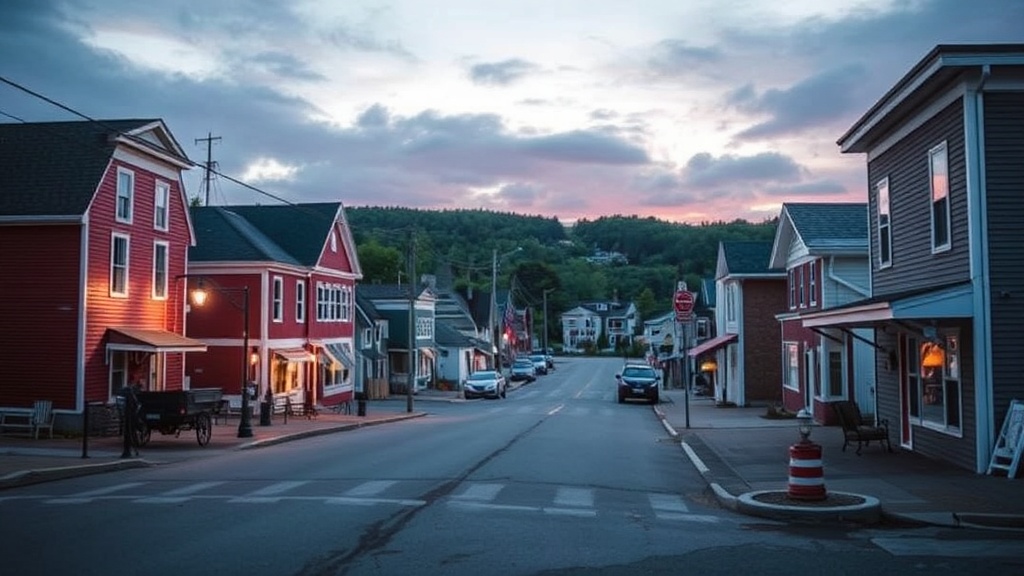
Where Can You Find Real Community in Nova Scotia's Small Towns?

What makes a neighbourhood feel like home in Nova Scotia?
We've all driven through those picture-perfect streets where people actually wave at each other — not because they're being polite to tourists, but because they know your name. In Nova Scotia, community isn't something you buy into; it's something you build, one coffee shop conversation and volunteer shift at a time. Whether you're new to the province or you've been here long enough to remember when the Cogswell Interchange was just a traffic headache (not a construction zone), finding your people matters. This isn't about the postcard version of Nova Scotia — it's about the real, working communities where neighbours help each other through power outages, share garden surplus in August, and argue about the best fish and chips spot with the conviction of people who actually live here.
Our communities across Nova Scotia have changed dramatically over the past decade. Young families are moving back to places their parents left. Remote workers are settling in towns like Wolfville and Truro, bringing new energy — and new questions about housing, schools, and belonging. Meanwhile, longtime residents are figuring out how to welcome newcomers without losing what made these places special in the first place. It's messy, complicated, and deeply human. And honestly? That's exactly what makes it worth writing about.
Which Nova Scotia towns are building genuine community spaces?
Mahone Bay gets a lot of attention for those three churches — you know the ones, they're on every calendar — but the real community magic happens at the Mahone Bay Centre. This isn't a tourist attraction; it's where the seniors' exercise class bumps up against the community garden committee meetings. The Centre runs a pay-what-you-can café on Thursdays that draws everyone from retired lobstermen to young families scraping by on service industry wages. What makes it work isn't the building — it's that the volunteers remember your order and ask about your kids.
Over in Pictou, the Ship Hector Heritage Quay might draw the day-trippers, but locals know the real gathering spot is the deCoste Centre. This performing arts venue hosts everything from Celtic music nights to community suppers. The volunteer ushers have been working there for decades, and they'll tell you which acts are worth braving a February storm for. Pictou's community runs deep — this is where the first Scottish settlers landed, and that history isn't locked in a museum. It lives in the Gaelic classes at the Nova Scotia government-supported cultural programs and the kitchen parties that still happen in basements along Water Street.
Lunenburg faces a unique challenge — UNESCO World Heritage designation brought tourism revenue but also Airbnb pressure that's pushed some locals out. Yet the community fights back in small, stubborn ways. The Lunenburg Folk Harbour Festival isn't just for visitors; it's when locals reclaim their streets. More importantly, the Lunenburg Community Food Hub on Falkland Street operates year-round, connecting local growers with families who want fresh produce without the organic boutique markup. They run a "community supported agriculture" program that's actually accessible — sliding scale payments, weekly pickup, and no shame if you need to skip a week.
How do newcomers actually fit into tight-knit Nova Scotia towns?
Let's be honest — some Nova Scotia communities can feel impenetrable at first. If your family hasn't been here for three generations, you might wonder if you'll ever be considered "local." The good news? It's absolutely possible, but it requires showing up consistently and contributing before you feel entitled to belonging.
Wolfville offers an interesting case study. Home to Acadia University, it's seen constant turnover for decades. The permanent residents — the ones who stay after graduation or arrive mid-career — tend to find their footing through specific channels. The Wolfville Farmers' Market on Saturdays isn't just shopping; it's where volunteer opportunities get posted and community projects find their people. The Acadia Community Farm welcomes non-student volunteers for their growing season, and that's where real relationships form — over rows of carrots and compost turning.
In Truro, the entry point for many is sports — specifically, the Colchester Legion Stadium and the various minor hockey and figure skating programs that dominate winter weekends. But there's also a quieter community forming around the Truro Public Library on Pictou Road. Their writers' groups, knitting circles, and newcomer meetups create low-pressure environments where you don't need to know anyone to walk in. The librarians there have a reputation for actually helping people find jobs, housing listings, and the right government forms — the kind of practical support that builds real loyalty.
The Immigration Services Association of Nova Scotia runs programs specifically designed to bridge this gap, pairing newcomers with established residents for conversation practice and cultural exchange. It's not perfect — sometimes the matches are awkward, sometimes they fizzle — but when they work, they create genuine friendships that span generations and backgrounds.
What community resources exist for families struggling to stay in Nova Scotia?
Housing costs in Halifax have spiraled, and that's pushed pressure into surrounding communities. But Nova Scotia has always been a place where people find creative solutions to economic challenges. Understanding what's actually available — not the polished government version, but the real, working resources — can make the difference between staying and leaving.
The Antigonish Affordable Housing Society operates several properties in town, but their real contribution is advocacy. They've pushed the municipality to allow secondary suites and laneway housing years before other towns considered it. That policy change means more options for young families who want to stay close to St. Francis Xavier University for work or education without paying student-rent prices.
In rural areas, the Nova Scotia Community Transportation Network fills gaps that public transit can't reach. In counties like Victoria and Guysborough, volunteer driver programs connect seniors and non-drivers with medical appointments and grocery trips. These aren't just transportation services — they're weekly check-ins, social connections for isolated residents, and sometimes the only human contact a person has. The drivers know which roads are passable after storms and which patients need extra time getting in and out of vehicles.
For families facing food insecurity, the Feed Nova Scotia network includes more than just emergency food banks. Their community food partners include school programs, community fridges, and mobile food markets that bring fresh produce to neighbourhoods without grocery stores. The Feed Nova Scotia website lists locations, but locals know the real intelligence comes from Facebook groups and word-of-mouth — which locations have the good bread, which ones offer culturally appropriate foods for specific communities, which ones treat clients with dignity.
Where do Nova Scotia's diverse communities find each other?
The old stereotype of Nova Scotia as uniformly Scottish doesn't match reality — and hasn't for generations. The African Nova Scotian community has been here for over 400 years, with deep roots in communities like Preston, Lincolnville, and Africville (whose residents were forcibly relocated, but whose descendants maintain strong connections). The Indigenous communities — Mi'kmaq First Nations across the province — maintain distinct cultural identities and governance structures that predate European settlement by millennia.
More recently, Syrian, Afghan, and Ukrainian newcomers have established communities in Halifax, Truro, and smaller towns. The Halifax Syrian Refugee Support Group evolved from an emergency response into a sustained community organization. They've helped open businesses on Quinpool Road and Gottingen Street, adding new flavours to our food scene and new perspectives to our civic life.
The 2SLGBTQ+ community in Nova Scotia punches above its weight, with organizations like The Youth Project providing support across the province, not just in Halifax. Their community centers and drop-in spaces in Sydney, Truro, and Bridgewater mean queer youth in rural areas don't have to travel to find their people. The annual Pride events in Halifax and Cape Breton are celebrations, sure, but they're also political statements in places where acceptance isn't universal.
What's the real cost of losing small-town community in Nova Scotia?
Every time a school closes in rural Nova Scotia — and they've been closing at an alarming rate — something irreplaceable disappears. Not just the building, not just the jobs, but the daily gathering point where parents connect, where kids from different backgrounds figure out how to coexist, where community knowledge gets transmitted. When the school in Economy closed, the community center tried to fill the gap, but it's not the same. The rhythm of the town changed.
We're watching this play out across Nova Scotia as younger people concentrate in Halifax and older residents remain in towns with shrinking services. The volunteers who maintained the community halls, organized the fire department fundraisers, and kept the curling rinks running are aging out. Sometimes there's no one to replace them. Sometimes newcomers step in — but they bring different ideas about how things should work, which creates friction, which sometimes leads to breakthroughs and sometimes to fractures.
The communities that survive — the ones that maintain that elusive "sense of place" — tend to share certain characteristics. They have a physical gathering spot that's not a commercial business (a legion, a community center, a church basement). They have at least one informal communication channel that actually works (a Facebook group, a Listserv, a phone tree, a bulletin board at the post office). And they have people who are willing to be inconvenienced — to drive a neighbour to the hospital, to staff the polling station, to spend Saturday morning cleaning the park.
Those people are Nova Scotia's real infrastructure. More important than the hospitals and highways we worry about funding are the social connections that make life here possible. When they break down, you get ghost towns with buildings still standing. When they hold, you get places where people want to stay — not because the jobs are great or the housing is cheap, but because they'd miss their neighbours too much to leave.